Summary of an interview comparing scar differences between FUT and FUE hair transplantation in Korea.

Today, we interviewed Dr. Jin‑oh Kim, the director of New Hair Hair Transplant Center in Gangnam, Seoul, Korea. He explained in detail the differences between FUT and FUE hair transplantation and how scars heal, based on real clinical cases.
Doctor: Let’s take a detailed look at how scars heal in both FUT and FUE hair transplantation. First, this is FUT, the traditional method. As you can see in the photo, there is a long linear scar across the back of the scalp. This also…
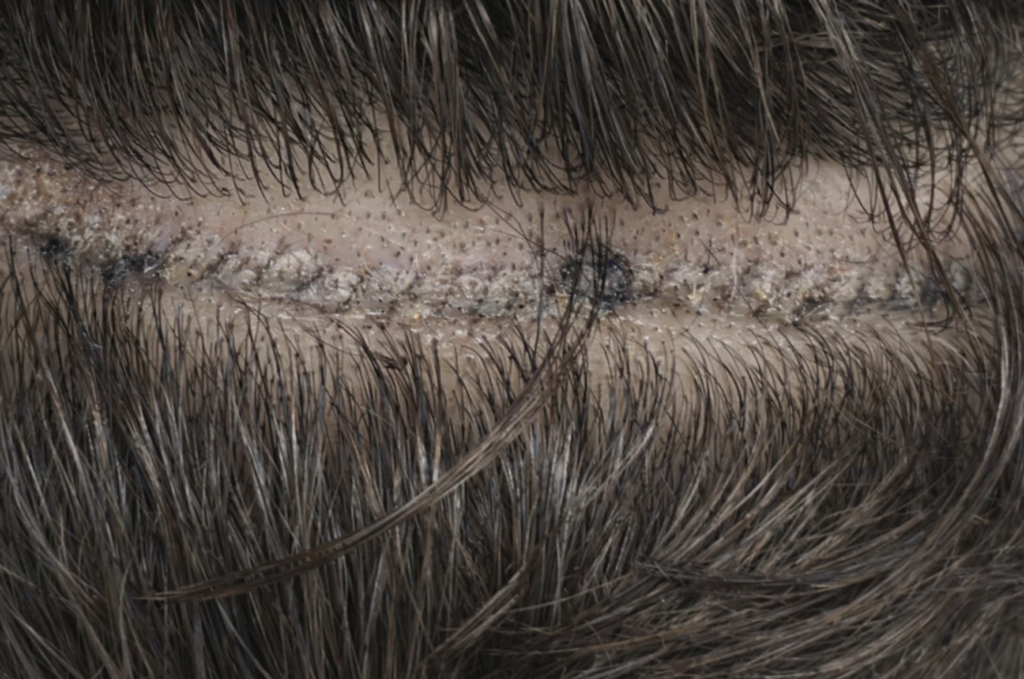
This line is the scar left after the incision was sutured. Right after surgery, the stitches may look unfamiliar, but once they are removed, only a thin linear scar remains.
Applying ointment helps the incision heal faster, so most patients are advised to apply it daily.
Those who live alone apply it themselves, while those with family or a partner often get help.
Many patients say, “The suturing was done very meticulously,” and that’s because we use plastic‑surgery suturing techniques.
In plastic surgery, we use a double‑layer closure: the soft tissue beneath the skin is tied first from the inside, and then the outer layer is sutured on top.
This method minimizes scarring and helps the wound heal smoothly.
About a year after stitch removal, the scar becomes so faint that it is barely noticeable.

The non‑incisional (FUE) method involves extracting each follicle individually without making an incision.
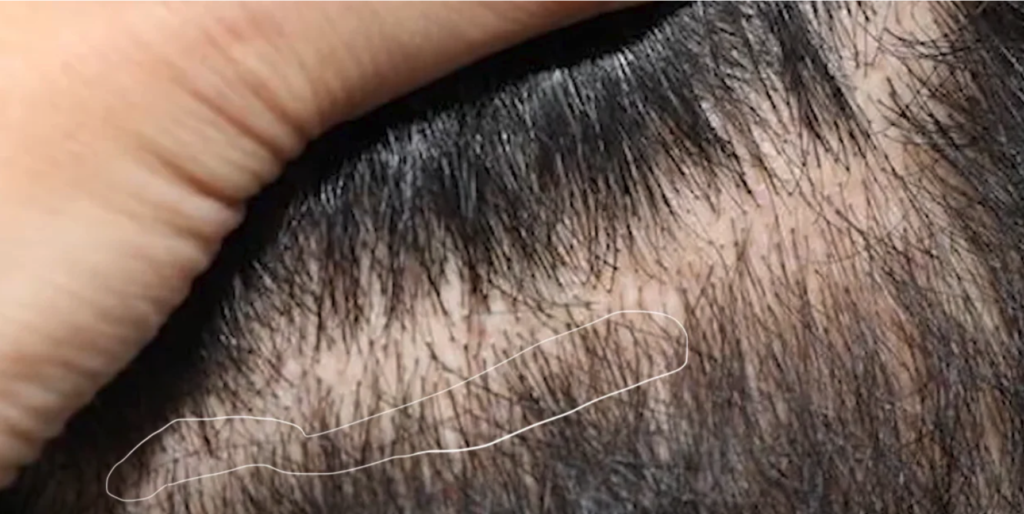
Right after surgery, you can see small holes across the scalp—these are the sites where follicles were harvested.
People with trypophobia may feel uncomfortable, but these holes naturally close over time.
Because FUE uses a cylindrical punch to remove the entire follicle unit, hair does not grow back in the extracted spots.
This is because the root of the follicle is removed as well.
For this reason, only about 30–40% of the donor hair is harvested, while the remaining 60% must be left to avoid thinning in the donor area.
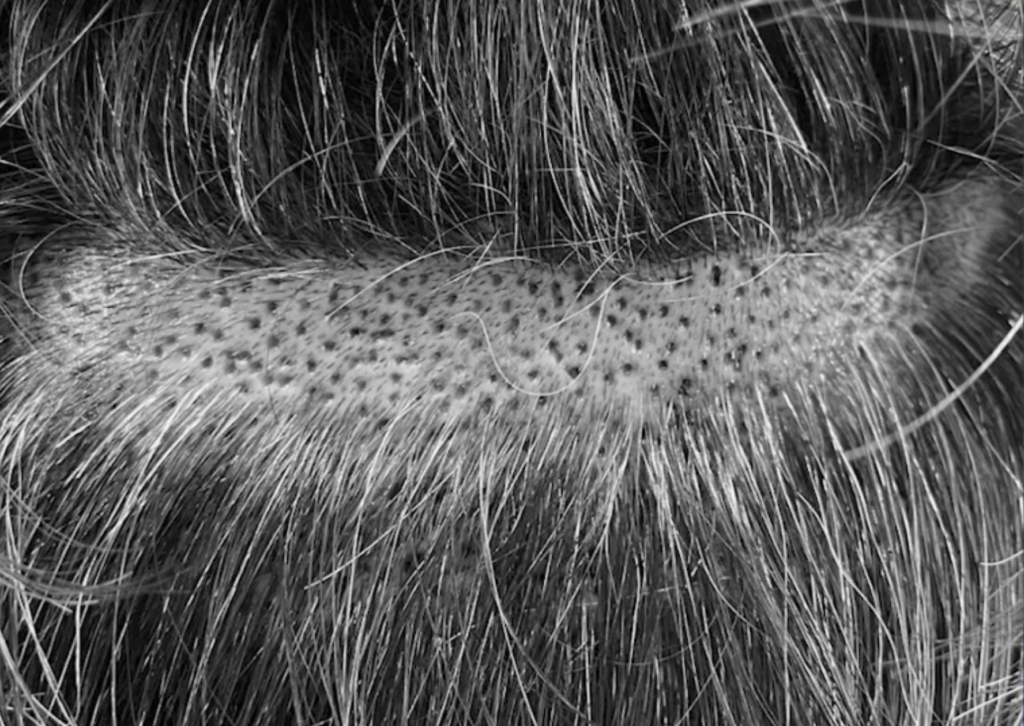
As healing progresses, the extraction marks become smaller, and up close, they may appear as tiny dot‑like scars.
If the hair is cut very short or shaved, these dots can become visible, and in such cases, scalp micropigmentation (SMP) can be used to cover them naturally.
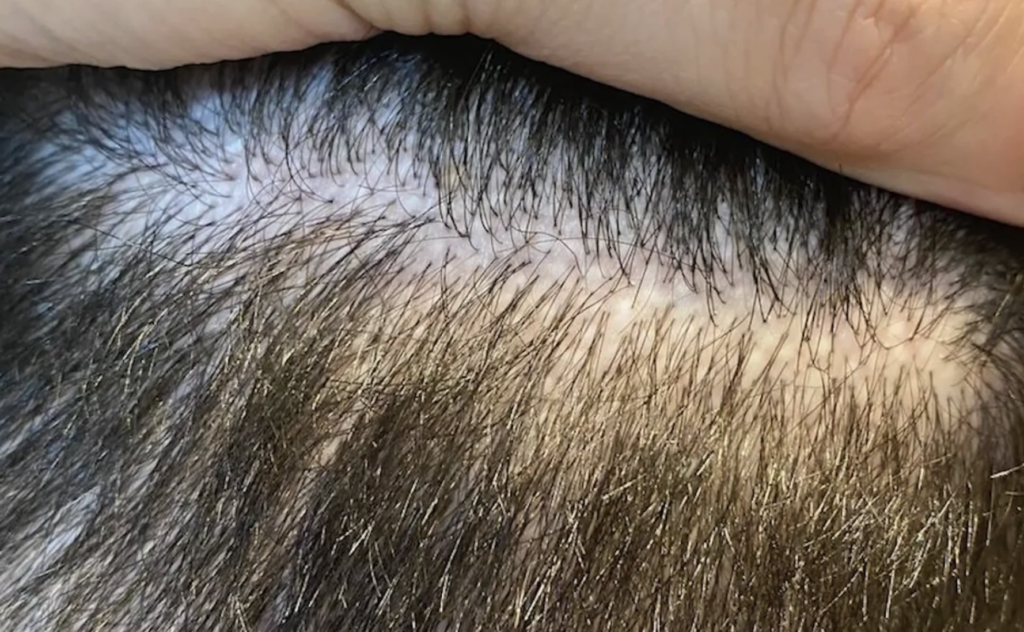
As healing progresses, the extraction marks become smaller, and up close they may appear as tiny dot‑like scars.
If the hair is cut very short or shaved, these dots can become visible, and scalp micropigmentation (SMP) can be used to cover them naturally.
During the interview, reviewing the patient photos was truly impressive.
To summarize:
FUT: Leaves a linear scar, but with proper suturing techniques it becomes barely noticeable.
FUE: Leaves tiny dot‑shaped scars that may show when the hair is shaved.
Both methods, with proper care and treatment, result in scars that gradually fade and do not significantly affect daily life.
This interview was conducted for video production, and the New Hair website is https://newhairps.com/